







America
Mutant Chernobyl wolves develop anti-cancer abilities, may pave way for cure: Study
New York, Feb 9
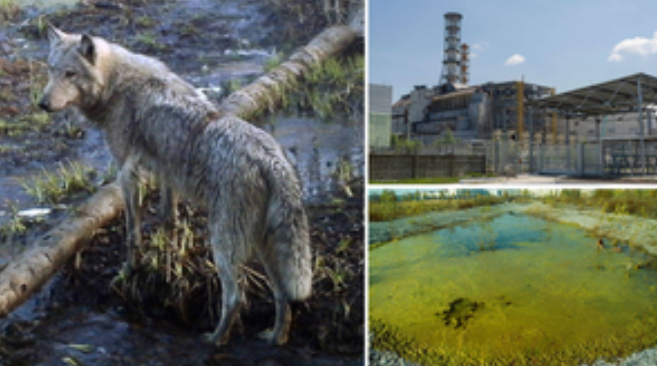
Mutant wolves around Chernobyl, where the world’s worst nuclear accident took place 35 years ago, has now developed anti-cancer abilities, an advance that may open door for cure against the deadly disease, according to a study.
In 1986, a nuclear reactor at the Chernobyl power plant exploded, releasing cancer-causing radiation and irradiated debris into the environment.
The Chernobyl Exclusion Zone (CEZ), a 1,000 square mile zone surrounding area, cordoned off to prevent further exposure to radiation, has been recolonised by wildlife like horses, wolves, forests, and fungi.
Now, researchers at the Princeton University in the US are studying how the wolves of Chernobyl survive and thrive despite generations of exposure and the accumulation of radioactive particles in their bodies.
The team led by Cara Love, an evolutionary biologist and ecotoxicologist in Shane Campbell-Staton’s lab at Princeton in 2014 went to the CEZ, radio-collared wolves, and took blood to understand the wolves’ responses to cancer-causing radiation.
Using these specialty GPS collars armed with radiation dosimeters, “we get real time measurements of where they are and how much (radiation) they are exposed to,” said Love.
They discovered that Chernobyl wolves were exposed to upwards of 11.28 millirem of radiation everyday for their entire lives, over six times the legal safety limit for the average human worker.
Unlike wolves living exclusively outside the CEZ, Love found that Chernobyl wolves have altered immune systems, similar to cancer patients undergoing radiation treatment. And most promising, she has identified specific regions of the wolf genome that seem resilient to increased cancer risk.
Most human research has found mutations increasing cancer risk (like BRCA does with breast cancer), but Love's work hopes to identify protective mutations that increase the odds of surviving cancer.
Tragically, Covid-19 and ongoing war in the region have prevented Love and her collaborators from returning to the CEZ since.
“Our priority is for people and collaborators there to be as safe as possible,” she said. Love presented the findings at the Annual Meeting of Society of Integrative and Comparative Biology’s Annual Meeting in Seattle, Washington in January.
20 hours ago
US: Afghan national charged with making terrorist threat in Texas
20 hours ago
Trump declares Venezuela airspace closed after threatening land action
20 hours ago
US: At least four people killed, 10 others injured in shooting in California
21 hours ago
Kerala Raj Bhavan to be renamed ‘Lok Bhavan’ from Dec 1
21 hours ago
Indian Navy's journey to self-reliance a matter of national pride: PM Modi on induction of INS Mahe
21 hours ago
Reforms reloaded after Bihar boost as Winter Session of Parliament begins tomorrow
21 hours ago
Delighted that winter tourism in U'khand is attracting lot of people: PM Modi
21 hours ago
'Heartwarming to see deep connection to sacred Buddha relics': PM Modi recalls Bhutan visit
21 hours ago
'Vocal for Local': Gifted 'Swadeshi' things to world leaders during G-20 Summit, says PM Modi
21 hours ago
MCD bypoll: Delhi CM votes in Shalimar Bagh, asks electors to join celebration of democracy
21 hours ago
Stalin govt 'bankrupting' universities, claims BJP
21 hours ago
Parliament Winter Session: Oppn flags key issues at all-party meet, criticises short duration
21 hours ago
Govt orders WhatsApp, Telegram, other apps to block access without active SIM
