Washington, Dec 18,
India–United States relations in 2025 have been “one of the most complicated” phases in decades, with ties hitting “almost rock bottom” and the relationship currently viewed through a transactional rather than strategic lens by the Trump administration, a top South Asia expert said.
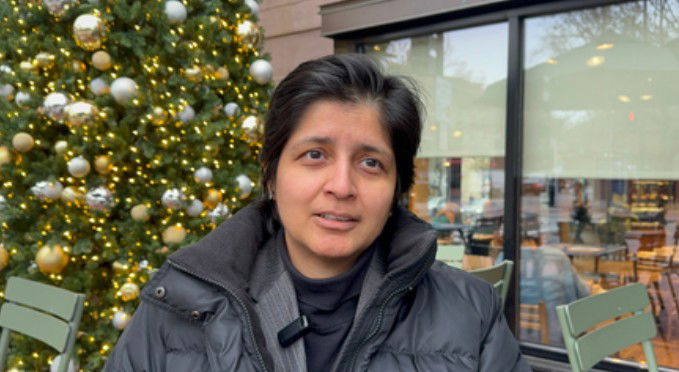
“This year has been one of the, let’s say, the most complicated,” Aparna Pande, a senior fellow at the prestigious Hudson Institute think-tank, told IANS in an interview, reflecting on the trajectory of bilateral ties. “At one level, it’s of a year in which India-US relations have hit almost rock bottom.”
Pande said the downturn also carries a limited silver lining. “On the positive side, this means that the only way they can go is up,” she said, cautioning that any recovery could take time. “It may take a few months. It may even take a few years.”
The pace and direction of that recovery, she said, will depend on how Washington frames its engagement with New Delhi. “It’ll all depend upon whether the American administration views the partnership with India as a strategic relationship or views it simply from a transactional or tactical lens.”
Asked how President Donald Trump and his administration currently see India, Pande was blunt. “As of now, it appears that the Trump administration, the second Trump administration, is viewing almost every relationship as transactional and tactical,” she said. “There is very little of grand strategy that is involved, and this applies to India as well.”
“At this point,” she added, “it is a transactional and tactical relationship. It is not a strategic partnership.”
Pande noted that the year had begun on a positive note, marked by high-level engagement. “The year started off very well on promise, with the February summit between Prime Minister Modi and President Trump,” she said, recalling that the two leaders had announced initiatives building on “what had happened for the previous 35 years.”
However, momentum stalled soon after. “Unfortunately, after that, things have not moved forward,” she said, pointing to trade frictions as a central factor. Pande cited the Trump administration’s tariff policies, including “the 50 per cent tariffs on India,” as emblematic of the current impasse and the absence of a trade deal.
Despite the broader diplomatic pause, Pande emphasised that engagement at working levels has not collapsed. “The operational level relationship is continuing,” she said, referencing ongoing interactions in areas such as humanitarian assistance and disaster relief, counter-terrorism, and routine bilateral exchanges.
At the same time, she said, “the big picture, high-level diplomatic relationship appears to be on hold,” a contrast she described as defining the past year.
On trade, Pande underscored that current disputes are not new. “All of these issues, which we are talking about today, we’ve talked about for 35 years,” she said. Previous US administrations, she noted, accepted that “trade with India will be slightly problematic” and made adjustments accordingly.
What is different now, she argued, is the administration’s narrow focus. “Because of this administration’s exclusive focus on trade and tariffs, we haven’t been able to move forward on the trade deal,” she said.
Pande added that India had “presented a very good trade deal draft to the American administration,” but the final outcome may hinge on the president’s judgment on whether it represents “the best trade deal he can possibly get from India.”
Pande also said Pakistan has re-emerged as a factor in US–India ties, alongside trade and Russia. “Yes, at one level… Pakistan has always known how to sort of appease or please American administrations,” she said. While past administrations largely discounted that, she said the current administration believes “there is some value that they can get from Pakistan.”
Responding to a question, she pointed to Pakistan’s perceived utility in areas ranging from the Middle East to “the realm of critical minerals,” but stressed clear limits.
“There is an inherent inbuilt limit to the extent to which the US-Pakistan relationship can grow,” she said, adding that it would remain confined to counterterrorism, domestic stability, and limited economic engagement. “I don’t believe that… we are back to the Cold War era,” she said.
Looking ahead to 2026, Pande struck a cautious but aspirational note. “We live in a world where I think it’s very difficult to predict,” she said, before outlining what she would like to see: “the trade deal,” “the core leaders summit,” and further Indian economic reforms, including “labour reforms,” insurance changes, and “maybe the nuclear liability bill.”