Washington, Dec 5
In a move that will significantly affect hundreds of thousands of Indian professionals and families navigating the US immigration system, US Citizenship and Immigration Services announced sweeping reductions to the maximum validity of Employment Authorisation Documents, saying the shift is necessary to strengthen security vetting and detect potential risks among those working in the United States.
USCIS said the revised policy will “result in more frequent vetting of aliens who apply for authorization to work in the United States,” enabling the agency to “deter fraud and detect aliens with potentially harmful intent so they can be processed for removal from the United States.”
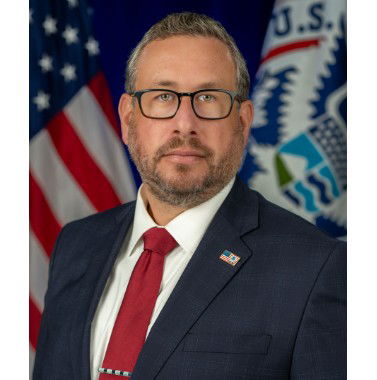
Director Joseph Edlow tied the decision to public-safety concerns. “Reducing the maximum validity period for employment authorization will ensure that those seeking to work in the United States do not threaten public safety or promote harmful anti-American ideologies,” he said.
Citing a recent attack involving service members in Washington, he added: “After the attack on National Guard service members in our nation’s capital by an alien who was admitted into this country by the previous administration, it’s even more clear that USCIS must conduct frequent vetting of aliens.”
The changes directly affect several categories heavily used by Indian nationals — including employment-based green card applicants and H-1B workers with pending adjustment of status cases. Under the new guidance, EADs issued to refugees, asylees, individuals granted withholding of removal, applicants with pending asylum or withholding claims, and those applying for adjustment under INA 245 will now be valid for 18 months instead of five years.
The Policy Alert states the rule applies to all applications “pending or filed on or after December 5, 2025.”
Parallel restrictions mandated by the One Big Beautiful Bill Act (H.R. 1) impose even tighter limits on those paroled into the United States, individuals granted Temporary Protected Status, those with pending TPS applications, and spouses of entrepreneur parolees. Their work permits will be capped at one year or the end of the underlying parole or TPS period, whichever is shorter. These rules apply to all Forms I-765 “pending or filed on or after July 22, 2025.”
The Federal Register notice detailing these changes also outlines new statutory fees — including $550 for specific initial applications and $275 for renewals — which USCIS cannot waive under H.R. 1. Most of the revenue flows to the US Treasury, with USCIS retaining a smaller share to support operations.
For Indian applicants caught in decades-long green card backlogs, the changes could create new uncertainty. Many rely on long-duration EAD and Advance Parole documents to remain employed while awaiting permanent residency, often for years.
Immigration attorney Emily Neumann warned that the shortened validity periods will intensify pressure on processing pipelines. “Employment-based I-485 applicants will now see EADs issued for 18 months instead of 5 years, effective December 5, 2025,” she said.
“This likely means the same for Advance Paroles. It would not be a big deal if renewals were processed timely. Unfortunately, it just creates more filings, which increases the backlog of cases, which increases processing times. This, coupled with the elimination of the automatic EAD renewal for pending applications, will just cause people to have to stop work for no good reason.”
USCIS said the changes are needed to “enhance its screening and vetting efforts, enable detection of aliens with potentially harmful intent, deter fraud, and place removable aliens into proceedings,” adding that the update “rescinds aspects of USCIS’ guidance of September 27, 2023” to ensure more frequent reviews.
The Indian diaspora — one of the largest beneficiaries of employment-based visas — is expected to be among the most affected communities. Many depend on uninterrupted work authorization to maintain jobs in technology, healthcare, academia, and research while awaiting green card availability, a process slowed by per-country caps.
USCIS backlogs have surged in recent years as applications for asylum, parole, TPS, and adjustment of status have risen sharply. The latest changes are expected to add new volume to the system, even as the agency continues efforts to modernize processing.
The new limits take effect December 5 for the 18-month categories and July 22 for the H.R. 1-mandated one-year documents, covering both pending and newly filed work-permit applications.